
In today’s competitive business landscape, access to timely and accurate information is critical. Business owners cannot afford to make decisions based on outdated spreadsheets or fragmented data from multiple systems. They need real-time business data and actionable insights to stay ahead of the curve.
This is where Odoo reporting and Odoo dashboards come into play. With a modern Odoo ERP system, business owners can consolidate operations, monitor performance, and make data-driven decisions using Odoo—all from a single platform.
In this article, we’ll explore how Odoo helps in decision-making, the power of ERP analytics, and why integrating Odoo into your business is a strategic move for 2026 and beyond.
The Challenge: Decisions Without Data
Many businesses still rely on traditional methods for decision-making:
- Monthly reports generated manually
- Data spread across multiple systems
- Delays in reconciling financial, sales, and inventory data
- Limited visibility into operational performance
This often results in slow, reactive decisions, missed opportunities, and operational inefficiencies.
Odoo analytics and reporting tools solve this problem by providing real-time insights across all business functions, empowering business owners to act quickly and confidently.
What Is Odoo Reporting & Dashboard?
Odoo reporting refers to the system’s ability to generate insights from your business data. These reports can range from financial statements to sales performance, inventory levels, project progress, and HR metrics.
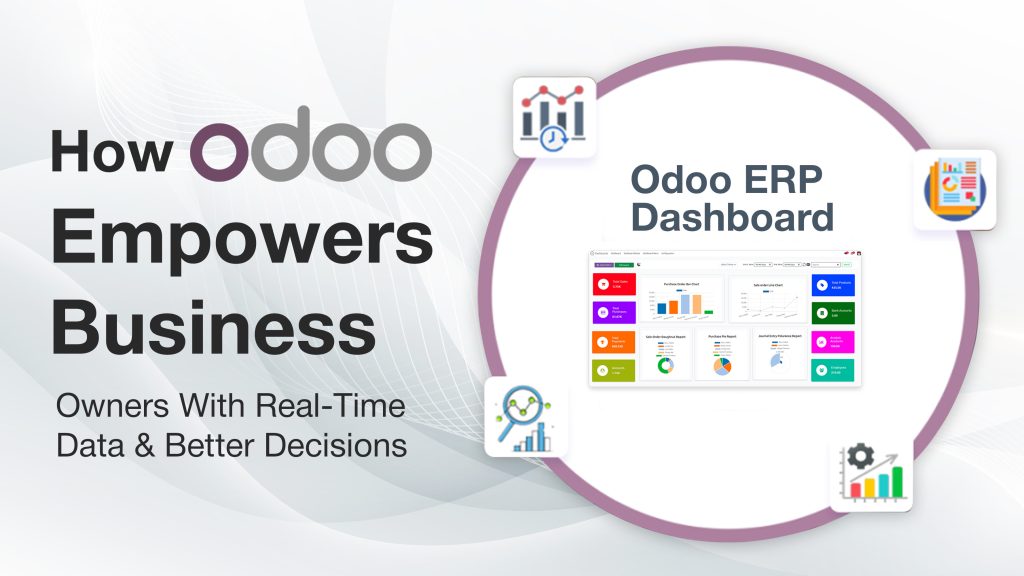
Odoo dashboards provide a visual interface where key metrics are displayed in real time, offering business owners a quick snapshot of their operations.
Together, these tools form a powerful business intelligence system, allowing companies to move from reactive management to proactive decision-making.
Key Features of Odoo Analytics
1. Real-Time Business Data
Unlike traditional systems that require manual consolidation, Odoo provides real-time data updates. Whenever a sale is recorded, inventory is updated, or an invoice is generated, dashboards reflect these changes instantly.
Benefits:
- Spot issues immediately
- Monitor cash flow, sales, and inventory in real-time
- Make informed decisions without delays
2. Customizable Dashboards
Odoo allows business owners to create dashboards tailored to their unique KPIs. For example:
- Sales dashboards showing revenue, pipeline, and conversion rates
- Finance dashboards tracking expenses, profit margins, and accounts receivable
- Inventory dashboards displaying stock levels and reorder points
Benefits:
- Focus on metrics that matter most
- Reduce time spent generating manual reports
- Improve visibility across departments
3. Advanced Reporting & Analytics
Odoo’s reporting system includes:
- Financial reports: Income statements, balance sheets, and cash flow
- Operational reports: Inventory turnover, production efficiency, project progress
- Sales & CRM reports: Leads, opportunities, and conversion metrics
With ERP analytics, businesses can identify trends, forecast demand, and uncover inefficiencies, allowing proactive decision-making.
4. Data-Driven Decision Making
The true power of Odoo lies in its ability to transform raw data into actionable insights.
- Analyze sales trends to optimize pricing and inventory
- Monitor project progress to allocate resources efficiently
- Track employee performance to improve productivity
Business owners can now make strategic, evidence-based decisions, rather than relying on gut feeling or delayed reports.
5. Seamless Integration Across Modules
Odoo’s ERP system integrates all business modules, meaning data flows seamlessly from one department to another:
- Sales updates inventory in real-time
- Accounting reflects sales and expenses automatically
- HR data links with payroll and project management
This unified system eliminates data silos, reduces errors, and ensures that decision-makers always have a complete and accurate picture of the business.
How Odoo Helps in Decision Making
Here are some practical ways business owners leverage Odoo for better decision-making:
1. Financial Planning & Forecasting
Odoo reporting tools enable businesses to:
- Track revenue and expenses accurately
- Forecast cash flow and budget effectively
- Compare actual performance against targets
With this information, businesses can plan expansions, investments, and cost-saving initiatives confidently.
2. Sales & Marketing Strategy
Using Odoo dashboards, business owners can monitor:
- Leads and opportunity conversion
- Customer behavior trends
- Campaign effectiveness
This allows data-driven adjustments to sales strategies, marketing campaigns, and customer engagement efforts.
3. Inventory & Supply Chain Management
Real-time insights into stock levels and supply chain operations help businesses:
- Reduce stockouts and overstocking
- Optimize procurement and production planning
- Identify bottlenecks in logistics
With Odoo analytics for business owners, operational decisions become faster and more accurate.
4. Project Management & Resource Allocation
Odoo dashboards track project progress, task completion, and resource utilization:
- Identify projects at risk of delays
- Allocate resources efficiently across teams
- Analyze project profitability
This ensures business owners maintain control over operations and can respond to challenges proactively.
5. Human Resource & Workforce Insights
With Odoo, HR data becomes actionable:
- Track employee attendance, performance, and productivity
- Plan workforce needs based on project and business growth
- Analyze HR costs and improve efficiency
These insights help businesses make informed staffing and operational decisions.
Benefits of Using Odoo for Real-Time Business Intelligence
- Improved Decision-Making: Access to live data ensures timely, informed decisions.
- Enhanced Operational Efficiency: Dashboards and reports streamline workflow monitoring.
- Predictive Insights: Identify trends and forecast business needs effectively.
- Reduced Errors: Automated reporting reduces manual errors and inconsistencies.
- Scalable Intelligence: As businesses grow, Odoo dashboards and reporting scale with them.
In short, Odoo transforms data from static information into a strategic asset, empowering business owners to take control of operations.
Why Odoo Analytics Is a Game-Changer
Business intelligence is no longer optional—it’s essential. By integrating Odoo reporting, dashboards, and ERP analytics, business owners gain:
- Full operational visibility across departments
- Actionable insights to drive growth and efficiency
- Faster reaction time to market changes
- Reduced dependency on manual reporting and spreadsheets
This level of insight ensures businesses are always making smarter, data-driven decisions—a competitive advantage in any industry.
Conclusion: Make Better Decisions with Odoo
In 2026, successful businesses rely on data-driven strategies to stay competitive. Odoo ERP provides a comprehensive platform for real-time reporting, dashboards, and analytics, allowing business owners to:
- Monitor operations across all departments
- Make informed and timely decisions
- Optimize workflows and resource allocation
- Forecast and plan strategically for the future
By leveraging business intelligence with Odoo, companies can turn data into actionable insights, driving growth, efficiency, and long-term success.
Whether you’re a startup, SME, or growing enterprise, Odoo empowers business owners with the tools they need to transform information into strategic advantage.